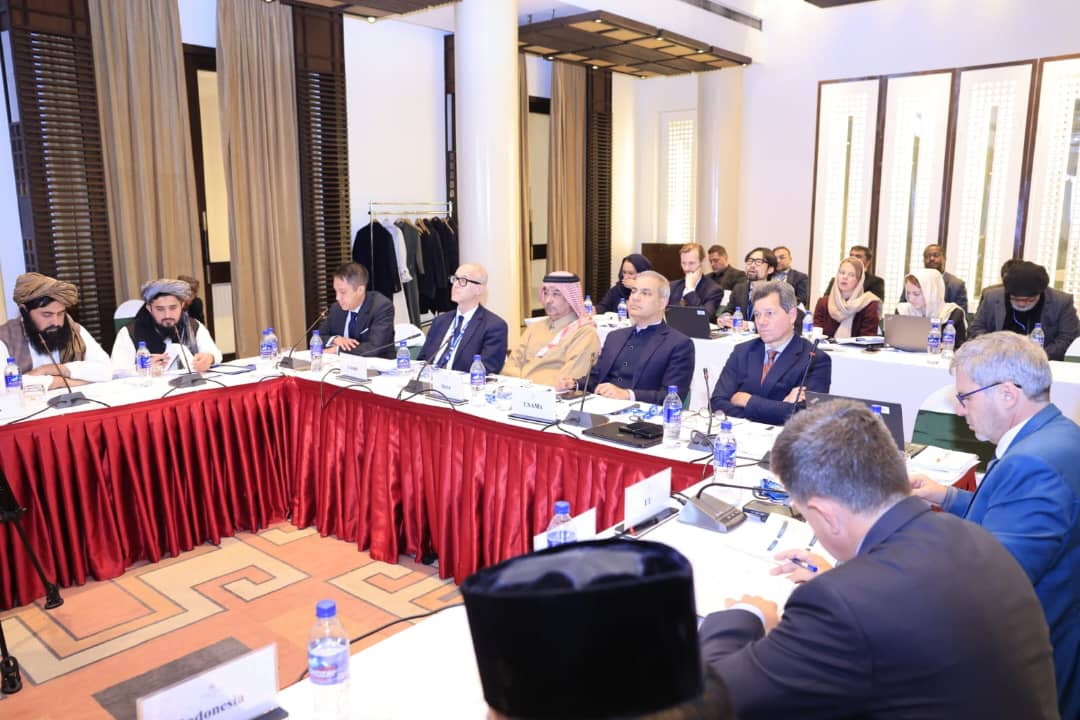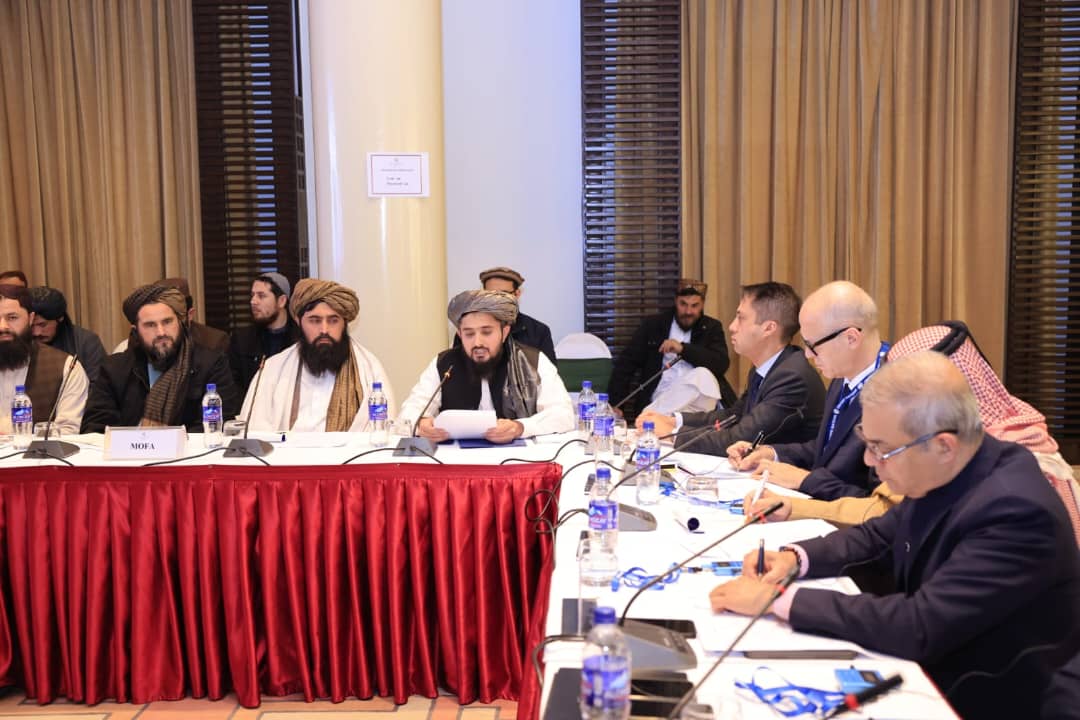

CARICC participation in working group meeting within the framework of the Doha Process
05 February 2026, 09:05 | 467
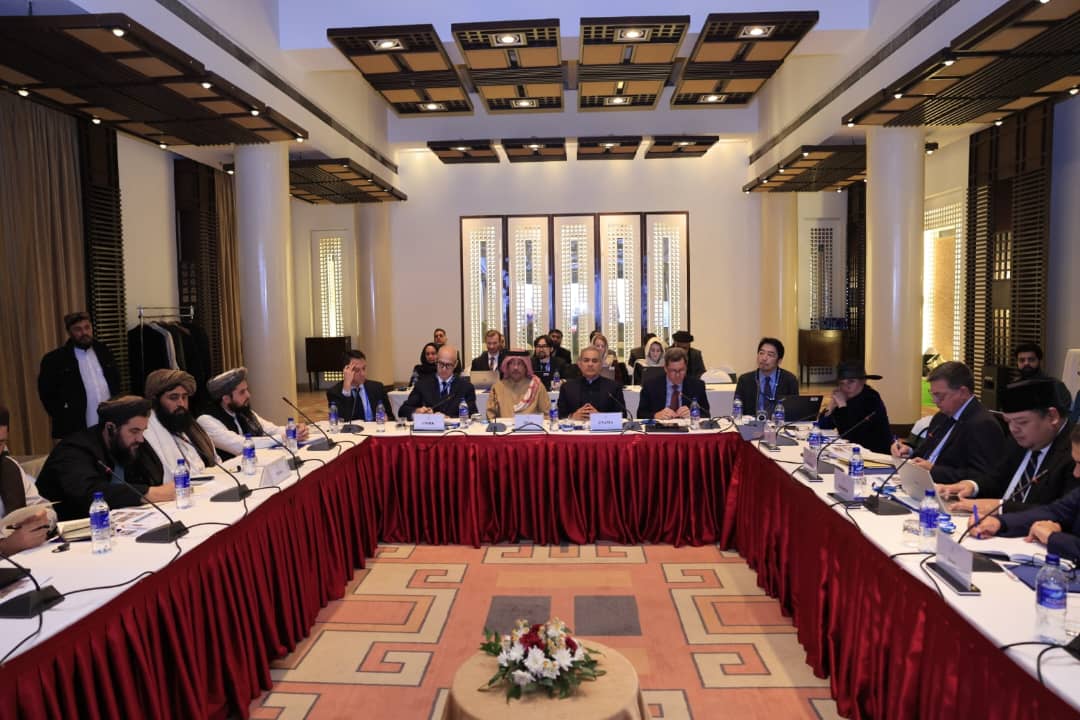
CARICC delegation led by Director M. Khamidov participated in the fourth meeting of the Counternarcotics Working Group of the Doha Process held on 3 February 2026 in Kabul.
The meeting was organized with the assistance of United Nations agencies: UNAMA, UNDP, FAO, WHO, UN Women, ILO, UNCTAD, IOM.
The event, held in a hybrid format, was also attended by delegations from Germany, Indonesia, Iran, Japan, Kazakhstan, Kyrgyzstan, Norway, Pakistan, Qatar, the Republic of Korea, Russia, Saudi Arabia, Switzerland, Türkiye, Turkmenistan, United Arab Emirates, European Union (EU), Organization of Islamic Cooperation (OIC), World Bank Group, the De Facto Authorities of Afghanistan - Ministry of Foreign Affairs, Ministry of Interior, Ministry of Agriculture, Irrigation and Livestock, Ministry of Public Health, Ministry of Energy and Water.
Chair of the meeting Mr. Scott Smith, Head of Political Affairs Service at UNAMA, noted that the main goal of the Doha Process is to ensure consistent, coordinated, and structured interaction with the De Facto Authorities of Afghanistan in the interests of the Afghan people. Emphasized the need to strengthen regional cooperation and support coordinated responses to transnational threats, including combating drug trafficking. At the same time, as a positive aspect of this process he noted meeting of the Council of National Coordinators of CARICC Member States in an expanded format held by Uzbekistan on 5 December 2025 in Samarkand, which contributed to unification of efforts of the international community with the Afghan authorities in ensuring security and stability in the region.
In his speech, Mr. Oliver Stolpe, UNODC Regional Representative for Afghanistan, Central Asia, Iran, and Pakistan, noted the importance of establishing cooperation with the Afghan authorities in countering illicit drug trafficking. He emphasized CARICC's key role in this process. Announced an upcoming international seminar on countering the spread of synthetic drugs and illicit trafficking of precursors, scheduled for 12-13 February in Astana. Representatives of the Ministry of Interior of Afghanistan have been invited to this event, which is being held jointly with CARICC.
During the event participants discussed ways to create a sustainable platform for technical dialogue and coordination between UN member states, international organizations, and the De Facto Authorities in Afghanistan. There was a lively exchange of views on identifying areas for further work. At the same time, emphasis was placed on the importance of international cooperation and support for the Afghan people in resolving existing problems.
In turn, CARICC gave a presentation on main areas of its activities. It was highlighted that the CARICC attaches particular importance to involving Afghanistan in regional cooperation in order to strengthen the region's anti-drug architecture with a view to ensuring regular information exchange, early detection of cross-border threats, and creation of a sustainable platform for practical cooperation.
Together with that, CARICC stressed that, with the Afghan government trying to cut down opium poppy crops, it's getting crucial to have steady alternative ways for rural residents to make money. Support for transition to other crops and forms of employment is a key condition for preventing Afghan farmers from returning to drug economy and for strengthening social stability. CARICC expresses readiness to facilitate analytical support for such programmes in coordination with UN agencies and development partners.
Photo Gallery